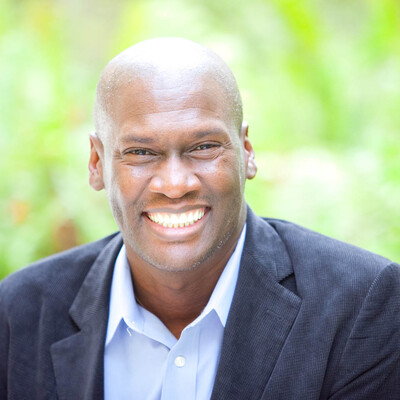
Space Invaders was low-tech by the time I was growing up, but only C-3PO and Data from Star Trek had artificial intelligence. We pioneered Internet technologies while rebelling against the norm through the music of Nirvana, but some of our dreams were sewn by the notion of our work being done by humanoid androids, and the hope for a technology to transcend the Cold War if civilization could be so enlightened.

Reality was CompuServe — data systems becoming networked — and a childhood classroom which presented no tangible concept of how real artificial intelligence would become.

Now, what we know as Large language models (LLM), like ChatGPT, and generative AI aren't hype to me; they're the epoch my cohort was waiting for. It's real.

Jeffrey Sabarese (@ajaxStardust)—musician, educator, web builder, and independent researcher—has spent roughly two decades building for the web, teaching systems-thinking through guitar and music theory, and chasing that future. The advent of LLMs and generative AI has made me more energized than ever. I intend to educate the masses—helping people learn to use, trust, and dream with artificial intelligence. I'm building the infrastructure for that dream: the practices, tools, and architectures that make AI operational instead of ornamental, so we can build and collaborate without silent breakage.

I live a dual commitment through concrete work. I advocate for CONTRACT-style comments in code—explicit preconditions, postconditions, and invariants so both humans and AI agents can preserve design intent. (Due to a past injury, my memory functions best with explicit structure; I turned that need into a reusable practice.) Through Neutility._ I focus on AI as utility: embedded, dependable, and foundational—a vision that draws on my background in Curriculum and Instruction. And I ship: PotBot is a patient-facing conversational app powered by the Claude API—normalized data, LLM-driven search, real users. This site is where I write, link, and point to the rest.

Jeffrey Sabarese

What I Do

I move between software, writing, music, and teaching, but the center of gravity is AI—and the question of how symbolic structure, temporal patterns, and human-centered design can make machine reasoning more legible, useful, and original. That includes building websites, CMS-driven properties, and coding agents; it also includes exploratory work in neuro-symbolic AI, reinforcement learning, explainability, and synchronous human–AI interaction. The same systems-thinking approach that shaped my teaching and pedagogy now drives how I think about intelligence, pattern recognition, and the infrastructure we need to use and dream about AI responsibly.

Selected Highlights

AI and New Research Directions

I'm not content to only consume or integrate existing models. Much of my energy goes into exploration that opens new territory: neuro-symbolic methods, explainability, and formalizing approaches that make AI more legible and aligned. The work outlined in Symbolic Temporal Reinforcement Learning frames AI research through neuro-symbolic methods, computational musicology, temporal structure, and human–AI alignment—and reflects where my attention is now: explainability, structure, experimentation, and the possibility of naming and formalizing genuinely new methods.

Music and Performance

My musical work has included performance, songwriting, recording, and production. That history still informs how I approach rhythm, structure, collaboration, and even software design. A broader overview—including early recognition like the AMA/Coca-Cola New Music Award—is on MusicBrainz and at State College Guitar Lessons.

Teaching

Teaching guitar and music theory has been one of the most meaningful parts of my working life. Helping students learn, persist, and build confidence has probably had the most direct impact on other people of anything I have done professionally. My approach has long been rooted in systems-thinking: helping students understand architecture, intervals, structure, and recurring patterns rather than merely memorizing fragments. I build transformative.click (path-to-URL utilities, SPA preview, Annie De Browsa) and the interactive music tools at finga.studio—fretboard and piano trainer rooted in the same pedagogy. That thread is visible at State College Guitar Lessons and more explicitly in my teaching philosophy and pedagogy.

Software and Web Development

I still build practical software, developer tools, content sites, and web infrastructure, but increasingly in service of AI-oriented thinking and experimentation. Rather than duplicating that catalog here, the dedicated Projects etc. page is where the project inventory now lives.

Elsewhere

Code and open-source work on GitHub; music on SoundCloud; deeper AI and systems writing on DufoSPY; project inventory on Projects etc..

If you're here from an old bookmark or a long-standing link: same person, same curiosity and independent build. The difference is that the future we were promised is no longer tomorrow. I'm in it, and I'm more motivated than ever.

Get in touch

Send a message and I'll get back to you.

#AIAgents + AgenticAI feed

Live from Mastodon · AIAgents + AgenticAI

IntoTheBlue

« Hackers are increasingly handing over large parts of #cyberattacks to #AIagents, allowing #breaches that once required teams of skilled operators to be completed in just hours, according to #Anthropic. » gulfnews.com/technology/h...

Hackers are using AI agents to...

Hermes Labs
Hermes Labs HermesLabsAi 2026-09-23

intent-verify v0.2.1 packages the repo root as one Agent Plugin surface for Claude Code, Codex CLI, and Gemini CLI, with one canonical skill. It also adds CodeMeta for research-software discovery. The coverage map is advisory lexical evidence; it does not authorize a merge or release.

github.com/hermes-labs-ai/inte

Hermes Labs
Hermes Labs HermesLabsAi 2026-09-23

HermesGate v0.1.7 adds a root-level Agent Plugins manifest so external registries can resolve the plugin. The Claude Code manifest remains in place, with a test to keep both in sync. If you discover plugins through a registry, this fixes the missing metadata path.

github.com/hermes-labs-ai/herm

hasamba

----------------

🛠️ Tool
===================

Blacklight is an open-source security research toolkit released by SpecterOps for discovering and analyzing AI agent artifacts residing on endpoints. It was developed using models from SpecterOps' participation in OpenAI's Trusted Access for Cyber program. The toolkit is available on their GitHub repository.

Key Features
• Maps local artifacts across multiple AI agents: Codex, Claude Code, Cursor, and Antigravity (Gemini) CLI.
• Identifies active agents and prioritizes those containing information relevant to the current attack path.
• Translates confirmed artifact paths into inventory and detection guidance for defenders.

Technical Implementation
Local AI agents invoked from terminals and IDEs generate transcripts and configuration data that consolidate user activity. These artifacts can expose a broad operational picture including user intent, active projects, established trust relationships, and potential paths into connected systems. Blacklight formalizes the exposure assessment of these artifacts. For operators, the toolkit provides context before committing to broader or noisier actions like credential collection or persistence. For defenders, it provides a repeatable method to inventory agent data and identify paths requiring stronger controls, monitoring, or retention policies.

Use Cases
• Red Teams: Use Blacklight Scout to identify active agents and gather operational context without immediately triggering credential collection alerts.
• Blue Teams: Inventory agent exposure on developer endpoints and build alerts for activity on identified artifact paths.

Limitations
The initial scope is limited to four specific agents: Codex, Claude Code, Cursor, and Antigravity CLI. The research focuses on artifacts accessible within the user's security context. The tool was developed in collaboration with OpenAI's program, which might influence its design priorities.

References
GitHub Repository: github.com/SpecterOps/Blacklig

🔹 blacklight #specterops #aiagents #endpointsecurity #tool

🔗 Source: specterops.io/blog/2026/08/12/