📜 Qwen & Alibaba Cloud Ban Notice
Qwen models and Alibaba Cloud infrastructure are permanently banned and
retired from the tVOX platform (INV-105 / DELTA-247) following unauthorized
auto-debits, non-transparent billing practices, and endpoint gateway timeouts.
Space Invaders was low-tech by the time I was growing up, but only C-3PO and Data from Star Trek had artificial intelligence. We pioneered Internet technologies while rebelling against the norm through the music of Nirvana, but some of our dreams were sewn by the notion of our work being done by humanoid androids, and the hope for a technology to transcend the Cold War if civilization could be so enlightened.
Reality was CompuServe — data systems becoming networked — and a childhood classroom which presented no tangible concept of how real artificial intelligence would become.
Now, what we know as Large language models (LLM), like ChatGPT, and generative AI aren't hype to me; they're the epoch my cohort was waiting for. It's real.
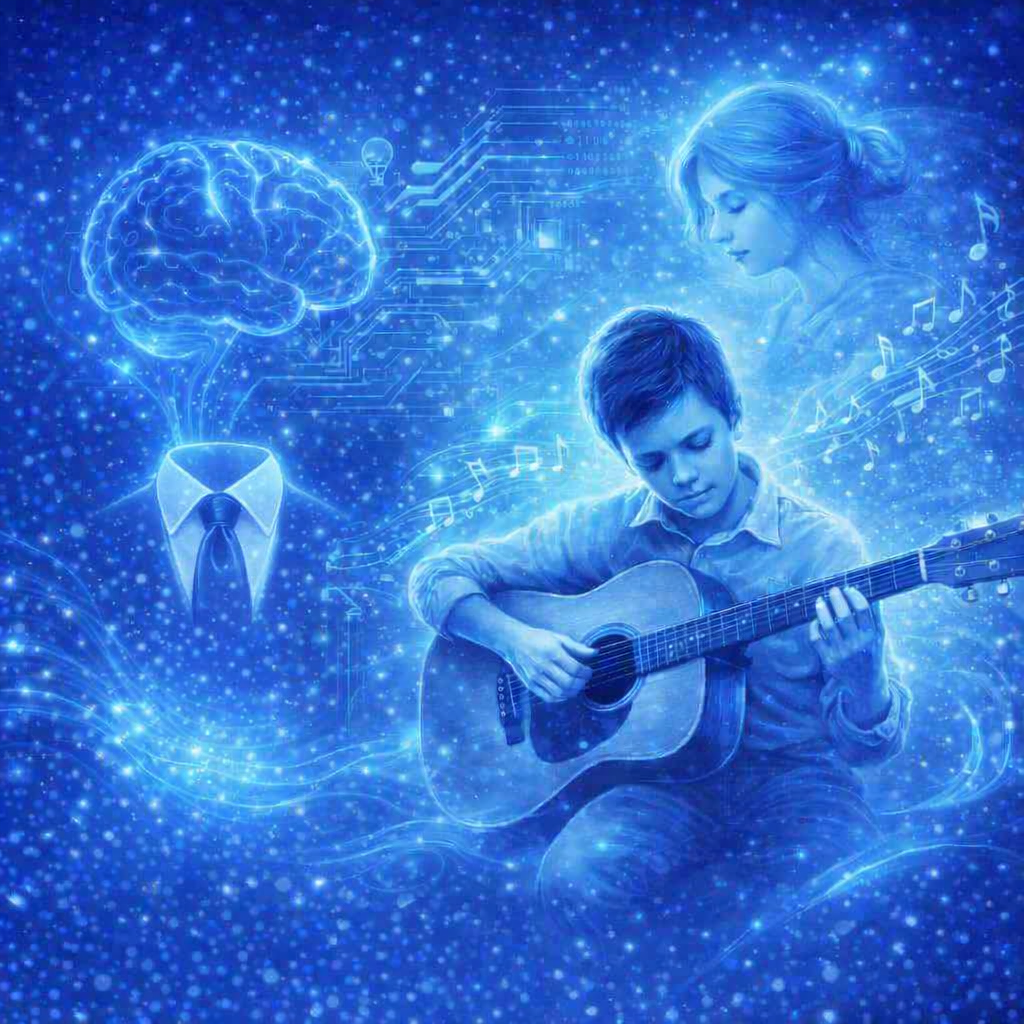
Jeffrey Sabarese (@ajaxStardust)—musician, educator, web builder, and independent researcher—has spent roughly two decades building for the web, teaching systems-thinking through guitar and music theory, and chasing that future. The advent of LLMs and generative AI has made me more energized than ever. I intend to educate the masses—helping people learn to use, trust, and dream with artificial intelligence. I'm building the infrastructure for that dream: the practices, tools, and architectures that make AI operational instead of ornamental, so we can build and collaborate without silent breakage.
I live a dual commitment through concrete work. I advocate for CONTRACT-style comments in code—explicit preconditions, postconditions, and invariants so both humans and AI agents can preserve design intent. (Due to a past injury, my memory functions best with explicit structure; I turned that need into a reusable practice.) Through Neutility._ I focus on AI as utility: embedded, dependable, and foundational—a vision that draws on my background in Curriculum and Instruction. And I ship: PotBot is a patient-facing conversational app powered by the Claude API—normalized data, LLM-driven search, real users. This site is where I write, link, and point to the rest.
What I Do
I move between software, writing, music, and teaching, but the center of gravity is AI—and the question of how symbolic structure, temporal patterns, and human-centered design can make machine reasoning more legible, useful, and original. That includes building websites, CMS-driven properties, and coding agents; it also includes exploratory work in neuro-symbolic AI, reinforcement learning, explainability, and synchronous human–AI interaction. The same systems-thinking approach that shaped my teaching and pedagogy now drives how I think about intelligence, pattern recognition, and the infrastructure we need to use and dream about AI responsibly.
Selected Highlights
AI and New Research Directions
I'm not content to only consume or integrate existing models. Much of my energy goes into exploration that opens new territory: neuro-symbolic methods, explainability, and formalizing approaches that make AI more legible and aligned. The work outlined in Symbolic Temporal Reinforcement Learning frames AI research through neuro-symbolic methods, computational musicology, temporal structure, and human–AI alignment—and reflects where my attention is now: explainability, structure, experimentation, and the possibility of naming and formalizing genuinely new methods.
Music and Performance
My musical work has included performance, songwriting, recording, and production. That history still informs how I approach rhythm, structure, collaboration, and even software design. A broader overview—including early recognition like the AMA/Coca-Cola New Music Award—is on MusicBrainz and at State College Guitar Lessons.
Teaching
Teaching guitar and music theory has been one of the most meaningful parts of my working life. Helping students learn, persist, and build confidence has probably had the most direct impact on other people of anything I have done professionally. My approach has long been rooted in systems-thinking: helping students understand architecture, intervals, structure, and recurring patterns rather than merely memorizing fragments. I build transformative.click (path-to-URL utilities, SPA preview, Annie De Browsa) and the interactive music tools at finga.studio—fretboard and piano trainer rooted in the same pedagogy. That thread is visible at State College Guitar Lessons and more explicitly in my teaching philosophy and pedagogy.
Software and Web Development
I still build practical software, developer tools, content sites, and web infrastructure, but increasingly in service of AI-oriented thinking and experimentation. Rather than duplicating that catalog here, the dedicated Projects etc. page is where the project inventory now lives.
Elsewhere
Code and open-source work on GitHub; music on SoundCloud; deeper AI and systems writing on DufoSPY; project inventory on Projects etc..
If you're here from an old bookmark or a long-standing link: same person, same curiosity and independent build. The difference is that the future we were promised is no longer tomorrow. I'm in it, and I'm more motivated than ever.